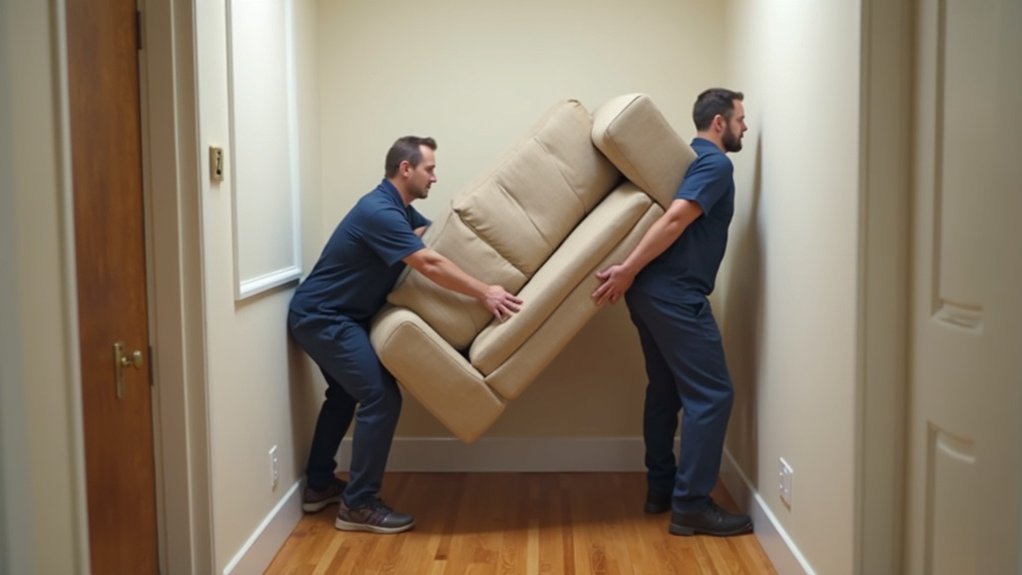
When moving in urban areas, you’ll want to reserve parking near your entrance, secure elevator time slots, and protect building surfaces. Bring specialized moving equipment like compact dollies and furniture sliders to traverse tight spaces efficiently. Communicate with building management about access requirements, and schedule your move during off-peak times. Stick around to discover pro strategies that’ll make your urban move smoother than you ever imagined.
Key Takeaways
- Reserve parking and elevator access in advance, coordinating with building management to secure dedicated time slots for your moving truck.
- Use specialized moving equipment like compact dollies, furniture sliders, and collapsible carts to navigate narrow urban hallways and tight spaces.
- Protect building infrastructure by covering floors with cardboard, installing corner guards, and using moving blankets to prevent damage during the move.
- Schedule your move during off-peak hours like midweek mornings to minimize traffic congestion and avoid building access restrictions.
- Designate a team member to manage move logistics, communicate with building staff, and ensure smooth coordination of loading and unloading.
Coordinate Parking and Building Access Ahead of Time
While moving day can be chaotic, proper planning for parking and building access can substantially reduce stress and potential complications. You’ll want to reserve parking spaces near your new home or building entrance well in advance.
Communicate with building management about elevator availability, move-in windows, and any specific guidelines they might have. Check if you need special permits or need to schedule a dedicated time slot for your moving truck. Local movers in Syracuse often have experience navigating complex building access requirements and can provide valuable guidance for your specific moving situation. By proactively addressing these logistics, you’ll optimize your moving process and minimize unexpected obstacles that could interrupt your carefully planned migration.
Choose the Right Moving Equipment for Tight Urban Spaces
Because urban environments often present unique moving challenges, selecting appropriate equipment can make or break your moving day. You’ll want dollies designed for narrow hallways, compact furniture selection, and strategic packing strategies that maximize efficiency in tight spaces.
Consider hand trucks with slim profiles and furniture sliders that’ll help you maneuver around tight corners. Collapsible moving carts and lightweight moving straps can be lifesavers when traversing apartment buildings with limited access. Remember, the right tools can alter a potentially stressful move into a seamless transition.
Professional movers with vast experience can provide additional guidance on navigating complex urban moving scenarios, using modern equipment to strategically stack and transport items efficiently.
Navigate Elevator Logistics Like a Professional Mover
Urban high-rise moves demand strategic elevator control to guarantee seamless shifts between floors. Professional movers understand that efficient elevator usage isn’t just about moving boxes—it’s about synchronized teamwork.
- Secure elevator reservation times in advance
- Designate a team member to manage coordinated move timing
- Use padding to protect elevator walls and floors
- Schedule specific time blocks for loading and unloading
- Communicate clearly with building management
Protect Walls and Floors During Challenging Moves
Protecting your living space during a move goes beyond careful elevator management. You’ll want to minimize furniture scuffs and prevent floor damage by using strategic protective materials. Invest in furniture sliders, heavy-duty moving blankets, and cardboard floor coverings to shield hardwood, tile, and carpeted surfaces.
Place corner guards on walls and doorways to prevent accidental dings and scratches. Use plastic sheeting in high-traffic areas and tape down edges to create a temporary protective pathway. Your careful preparation will save you from costly repair bills and maintain your space’s integrity during a challenging move.
Time Your Move to Minimize Urban Moving Challenges
While city moves present unique logistical challenges, strategically timing your relocation can dramatically reduce stress and complexity.
- Schedule midweek moves when traffic and building restrictions are typically lighter
- Plan early morning departures to avoid peak urban congestion
- Leverage movers’ expertise for navigating complex city parking and loading zones
- Choose off-peak moving seasons for potentially lower rates
- Coordinate with building management about elevator and access restrictions
Frequently Asked Questions
How Much Should I Tip Movers in a Tight Urban Setting?
You’ll want to tip 15-20% for the private moving company, adjusting for building management assistance and the extra effort traversing tight urban spaces. Your gratitude helps create a positive moving experience.
Can I Reserve Elevator Time in My Apartment Building?
You’ll want to reserve elevator time by coordinating with your building’s management. Call ahead, schedule specific windows, and confirm access to guarantee a smooth, stress-free moving experience with your fellow residents.
What Happens if the Moving Truck Can’t Park Directly Outside?
You’ll need to secure temporary loading permits and identify alternate loading zones nearby. Communicate with local authorities, and be prepared to carry items slightly further to guarantee a smooth move.
Are There Weight Limits for Elevators During Residential Moves?
You’ll want to check your building’s elevator load capacity and size restrictions before moving day. Coordinate with management to guarantee your movers can safely transport your belongings without exceeding weight limits.
How Do I Handle Parking Restrictions on Moving Day?
You’ll want to check local parking rules and find alternate parking locations like nearby lots or street spaces. Plan ahead, communicate with neighbors, and secure necessary permits to avoid moving day hassles.