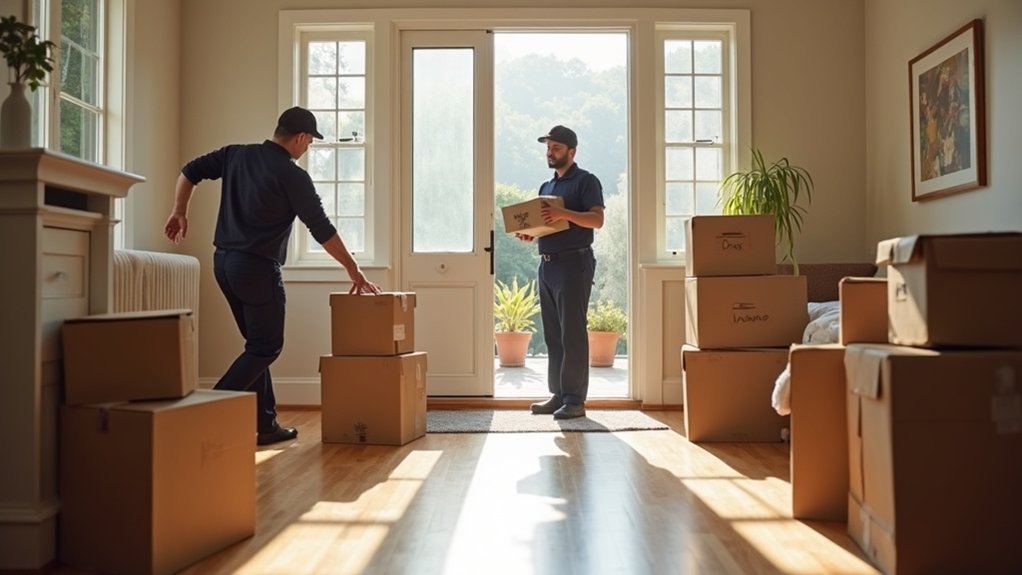
On moving day, you’ll start with final packing and logistics checks. Professional movers will arrive, survey your space, and systematically load your belongings, protecting fragile items and maximizing truck space. They’ll carefully transport your possessions to your new home, where they’ll help unload and position essential furniture. You’ll spend the evening setting up critical areas like your bedroom and kitchen. Curious about the full expedition?
Key Takeaways
- Moving professionals arrive and conduct an initial survey of belongings, developing a systematic plan for efficient transportation and loading.
- Heavy furniture and large items are strategically loaded first, using protective padding and straps to ensure safe transportation of possessions.
- The moving truck navigates pre-planned routes, considering traffic patterns, construction zones, and optimal timing to minimize transit complications.
- Upon arrival at the new location, movers systematically unload items, prioritizing placement of essential furniture and creating functional living spaces.
- Throughout the day, a comprehensive process unfolds from careful packing at the original residence to strategic unpacking and setup at the new home, ensuring a smooth transition.
Morning Prep: Final Packing and Logistics Check
How do you guarantee everything is prepared on moving day? Start by double-checking your secure documentation and confirming all paperwork is organized and readily accessible. Review your moving timeline and verify details with your moving team.
Verify you’ve reserved a parking space near your new home or current residence for the moving truck. Pack a personal essentials bag with vital items like medications, chargers, and a change of clothes. Do a final walkthrough of your current space, checking cabinets, closets, and storage areas to make certain nothing’s left behind. Licensed movers can help ensure a smooth and organized moving process, especially when handling complex relocations across town or between different locations.
Arrival of Moving Professionals: What to Expect When They Show Up?
When professional movers arrive, they’ll typically start by performing a quick survey of your belongings and space. They’ll assess the moving crew coordination needed and plan their equipment setup strategy. Fully licensed movers who serve Syracuse and surrounding areas will ensure a professional and systematic approach to your move.
You’ll want to be present during this initial walkthrough, answering questions and highlighting any delicate or special items. The team will likely review their moving plan with you, confirming details like room destinations and handling instructions.
Their professional approach will help you feel more comfortable and confident about the moving process, ensuring a seamless shift to your new home.
Loading Strategy: Protecting Your Belongings and Maximizing Space
The moving truck becomes a strategic puzzle of physics and protection, where professional movers carefully orchestrate the loading process to safeguard your belongings and maximize space efficiency.
They’ll prioritize heavy furniture first, creating a stable base and using cargo protection methods like furniture pads and straps to prevent shifting. Your fragile items will be strategically placed in cushioned areas, ensuring truck loading optimization.
Movers will systematically fill spaces between items, using blankets and padding to create a secure, compact arrangement that minimizes potential damage during transit.
Last-Minute Home Departure: Cleaning and Final Walkthrough Essentials
As you conclude your moving day preparations, cleaning out and doing a final walkthrough of your departing home becomes crucial for ensuring a seamless relocation. Grab your decluttering checklist and systematically move through each room, removing remaining items and wiping down surfaces.
Check cabinets, closets, and hidden spaces to confirm nothing’s left behind. During your final home inspection, document any necessary repairs or cleaning needs. Take photographs for your records, which can protect you from potential disputes with landlords or buyers.
Sweep, vacuum, and mop floors as your last act of care for this space.
Transportation and Transit: Navigating the Move Between Locations
After thoroughly cleaning your old home, you’ll now shift focus to the logistics of moving your belongings from one location to another. Carefully plan your transportation route, considering potential traffic patterns and parking challenges at both your current and destination addresses.
You’ll want to map out precise lanes, potential construction zones, and alternative routes. If you’re using a moving truck, scout parking logistics in advance, ensuring you’ll have space to load and unload efficiently. Consider timing your transit during off-peak hours to minimize traffic guidance and reduce overall moving stress.
Unloading and Initial Home Setup: Creating Immediate Functional Spaces
When you arrive at your new home, prioritize strategic unloading and immediate functional setup to metamorphose an empty space into a livable environment. Begin by positioning essential furniture like beds, sofas, and dining chairs to create functional zones.
Quickly install critical appliances such as refrigerators and washers to establish basic living capabilities. Focus on high-traffic areas first, ensuring pathways are clear and key rooms are operational.
Unpack kitchen essentials and bathroom necessities to establish immediate comfort. Your goal is transitioning a blank space into a welcoming, functional home that reflects your personal style and meets your immediate needs.
Evening Settlement: Unpacking Priorities and First Night Survival Guide
Moving day winds down, and you’ll want to settle into your new space strategically. Prioritize your unpacking routine by focusing on essential boxes marked “First Night” to create immediate comfort. Unpack bedding, toiletries, and a change of clothes first.
Review your household inventory to guarantee critical items are accessible. Set up your bedroom and bathroom to establish a sense of normalcy. Arrange basic kitchen necessities like a coffee maker, utensils, and snacks. Your goal is creating a functional mini-sanctuary that helps you migrate smoothly into your new home.
Frequently Asked Questions
How Much Should I Tip Professional Movers?
You’ll want to tip professional movers 15-20% of the total moving cost, or $10-$20 per mover, depending on the job’s complexity and their moving day gratuity performance.
What Unexpected Costs Might Arise During Moving Day?
You’ll likely encounter unexpected utility fees, last-minute packing supply costs, potential truck rental overages, parking permit expenses, and possible storage extension charges during your move.
Can I Move Valuable or Fragile Items Myself?
You shouldn’t move precious or fragile items alone. Consider professional packing techniques and specialized moving services that’ll securely protect your cherished possessions, ensuring they arrive safely and intact at your new home.
How Long Does a Typical Residential Move Take?
Your move’s timeline depends on home size, but you’ll typically spend 1-2 days packing and 4-8 hours on moving logistics, with professional movers completing a local move in about 2-3 hours.
What Insurance Coverage Do Moving Companies Provide?
Most movers offer basic liability coverage of $0.60 per pound, but you’ll want to ask about full replacement coverage to protect your belongings during your important move.